
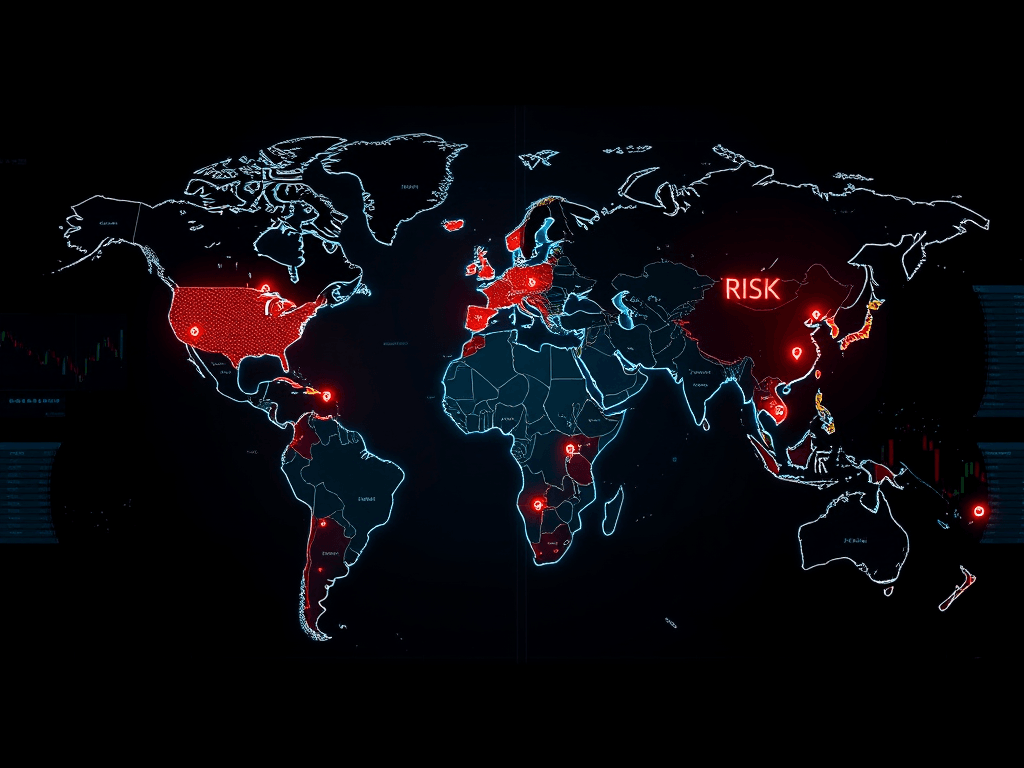
Portfolio Protection Strategies Against Geopolitical Risks in 2026: Building Resilience in an Uncertain World
Building a resilient portfolio has never been more critical than in 2026, as geopolitical tensions—from ongoing US-China strategic competition to conflicts in the Middle East and Europe—continue to create volatility across global markets. As part of a broader approach to wealth building that incorporates AI-driven tools, ESG principles, and innovative assets like tokenized RWAs, protecting against geopolitical risks ensures long-term stability and sustained growth. This guide delves into proven strategies for global investors to shield their portfolios from these uncertainties, drawing on insights from leading institutions like BlackRock, Wellington Management, and PIMCO. By implementing diversification, safe-haven allocations, and dynamic hedging, investors can not only mitigate downside risks but also position themselves to capitalize on opportunities that arise from shifting global dynamics.

Understanding Geopolitical Risks in 2026 and Their Impact on Investments
Geopolitical risks in 2026 remain elevated, characterized by great power rivalries, trade fragmentation, and regional conflicts. According to BlackRock’s Geopolitical Risk Dashboard, key threats include accelerated US-China technology decoupling, tariff escalations, and tensions in the Indo-Pacific. Wellington Management highlights a “fragmented global order” where national security priorities drive policy, leading to higher market volatility and structural risk premiums.
These risks manifest in portfolios through sudden asset price swings, currency fluctuations, supply chain disruptions, and inflation spikes. Historical events, such as the 2022 Ukraine invasion causing energy shocks or the 2020 oil price war, demonstrate how geopolitics can trigger drawdowns of 10-30% in equities while boosting safe-havens like gold. For global investors, the challenge is amplified by cross-border exposures—e.g., European holdings vulnerable to energy crises or Asian allocations affected by trade wars.
Yet, resilience is achievable. Data from Morningstar shows diversified portfolios incorporating hedges reduced volatility by 15-25% during recent geopolitical stress tests. The key is proactive allocation that balances growth with protection.

Core Strategy 1: Geographic and Sector Diversification – The Foundation of Resilience
Diversification remains the most effective defense against geopolitical uncertainty. Spreading investments across regions and sectors reduces concentration risk—no single event can devastate your portfolio.
- Geographic Diversification: Allocate beyond home markets. In 2026, with US-China tensions high, overweight stable regions like Switzerland or Singapore while maintaining exposure to emerging opportunities in India or selective Gulf states. VanEck recommends geographic spreads to counter centralized shocks, such as North Korea-related volatility affecting South Korea.
- Sector Diversification: Favor defensive sectors like healthcare, consumer staples, and utilities, which historically outperform during crises. Avoid overexposure to cyclical sectors like energy (vulnerable to Middle East conflicts) or tech (impacted by decoupling).
Recommended Allocation Example for 2026:
- 40% North America (stable aristocrats)
- 30% Europe/Developed ex-US
- 20% Emerging Markets (selective, e.g., India growth)
- 10% Alternatives (global infrastructure)
PIMCO and UBS emphasize that diversified portfolios weathered 2022-2025 shocks better, with real assets providing inflation protection.
Core Strategy 2: Safe-Haven Assets – Gold, Treasuries, and Currencies as Buffers
Safe-havens shine during geopolitical flare-ups. Gold, often called the ultimate hedge, surged during past crises and is projected to benefit in 2026 from central bank buying and uncertainty.
- Gold and Precious Metals: Allocate 5-15%—PwC forecasts strong demand amid fragmentation. ETFs like GLD offer easy access.
- Government Bonds: High-quality Treasuries or Swiss bonds for growth shocks (J.P. Morgan favors bonds for deflationary risks).
- Safe-Haven Currencies: USD, CHF, JPY—hedge via currency ETFs.
BlackRock notes gold’s role in reserve diversification, with central banks holding more than Treasuries in some cases.

Core Strategy 3: Real Assets and Alternatives for Inflation and Supply Chain Protection
Real assets like infrastructure, commodities, and timber provide tangible protection against inflation often triggered by geopolitical events (e.g., energy sanctions).
- Infrastructure and Renewables: Resilient to disruptions, offering 8-10% yields (BlackRock tokenized funds).
- Commodities: Energy and metals as hedges.
- Hedge Funds/Alternatives: Long/short strategies for alpha in volatile environments (Wellington highlights opportunities).
PGIM recommends real assets for inflationary shocks, complementing bonds for growth protection.
Core Strategy 4: Dynamic Hedging and Active Management
- Options and Futures: Put options for downside protection.
- Currency Hedging: Neutral ETFs for international holdings.
- Scenario Planning: Quarterly stress tests for events like Taiwan tensions.
Active management thrives here—differentiation at country/industry level creates alpha.

Conclusion: Crafting a Geopolitically Resilient Portfolio for 2026
In an era of persistent geopolitical uncertainty, portfolio protection is not about avoiding risk but managing it intelligently. By combining diversification, safe-havens, real assets, and dynamic tools, global investors can build resilience while pursuing growth. Integrate these strategies with AI tools and tokenization for a truly modern, robust approach. Which protection method will you prioritize? Share below!
Disclaimer: Educational only—not financial advice. Consult professionals.